SnapHunt Bingo at the MediaNight
This is the third and final blog post about the game project "SnapHunt Bingo" which im developing with three other university students as part of our obligatory software project. I'm planning to publish and maintain this game so stay tuned for more posts to come!
The MediaNight came closer and closer so we picked up the development pace to get a fully functioning version of our game that we are proud of presenting at the media night.
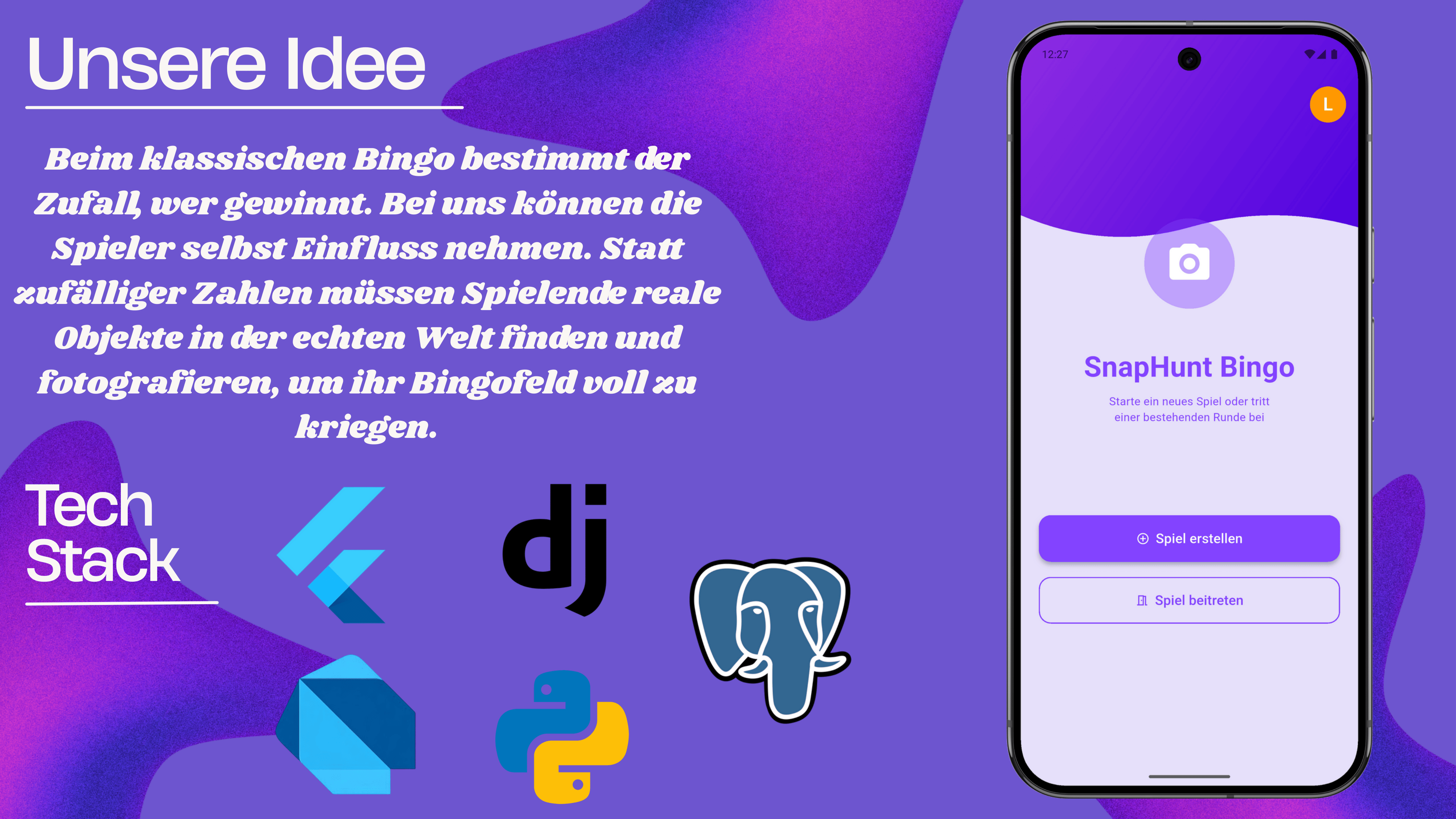
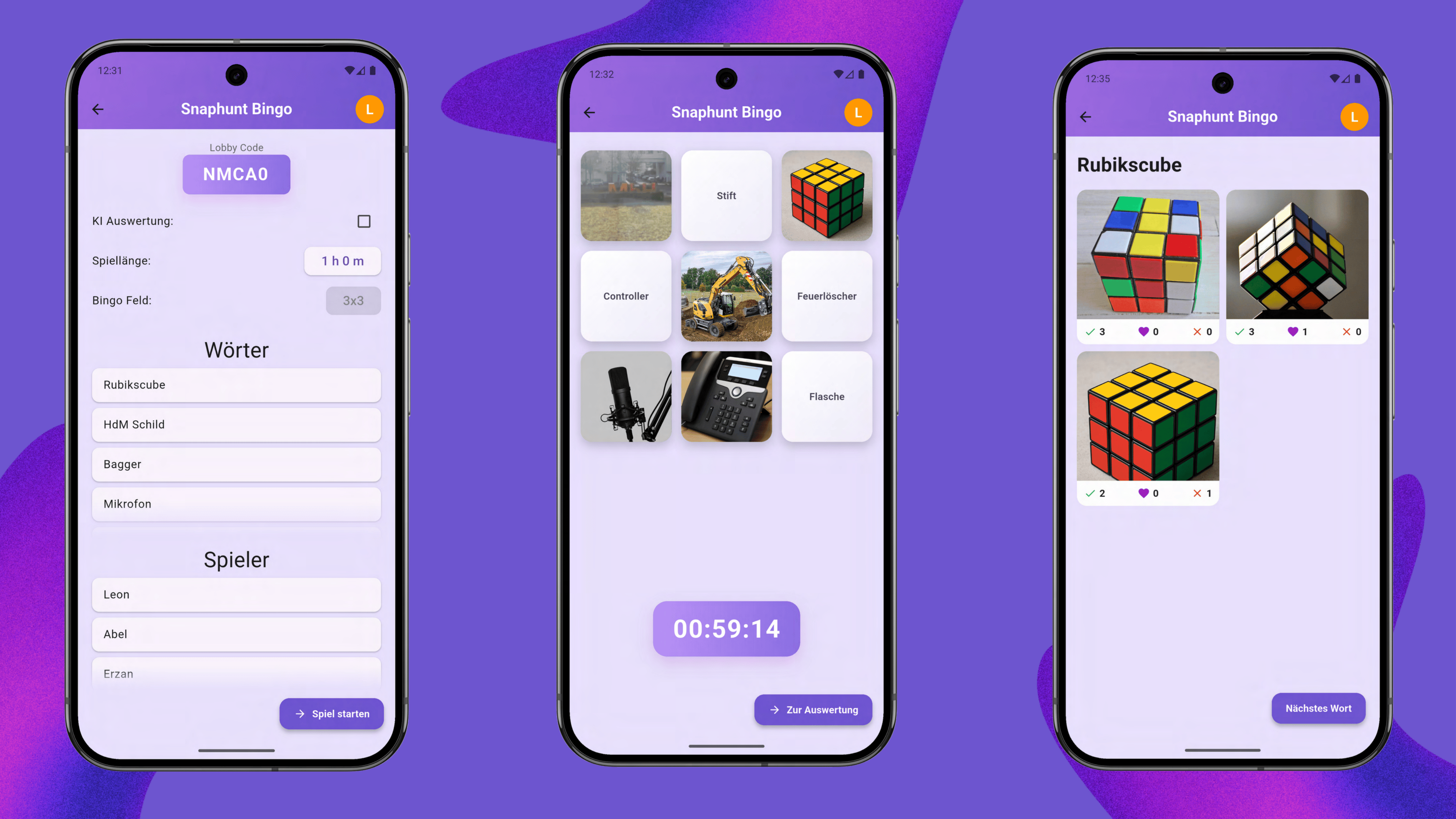
But first… there is the Präsentationstag. We created some beautiful slides so everyone wants to play our game:
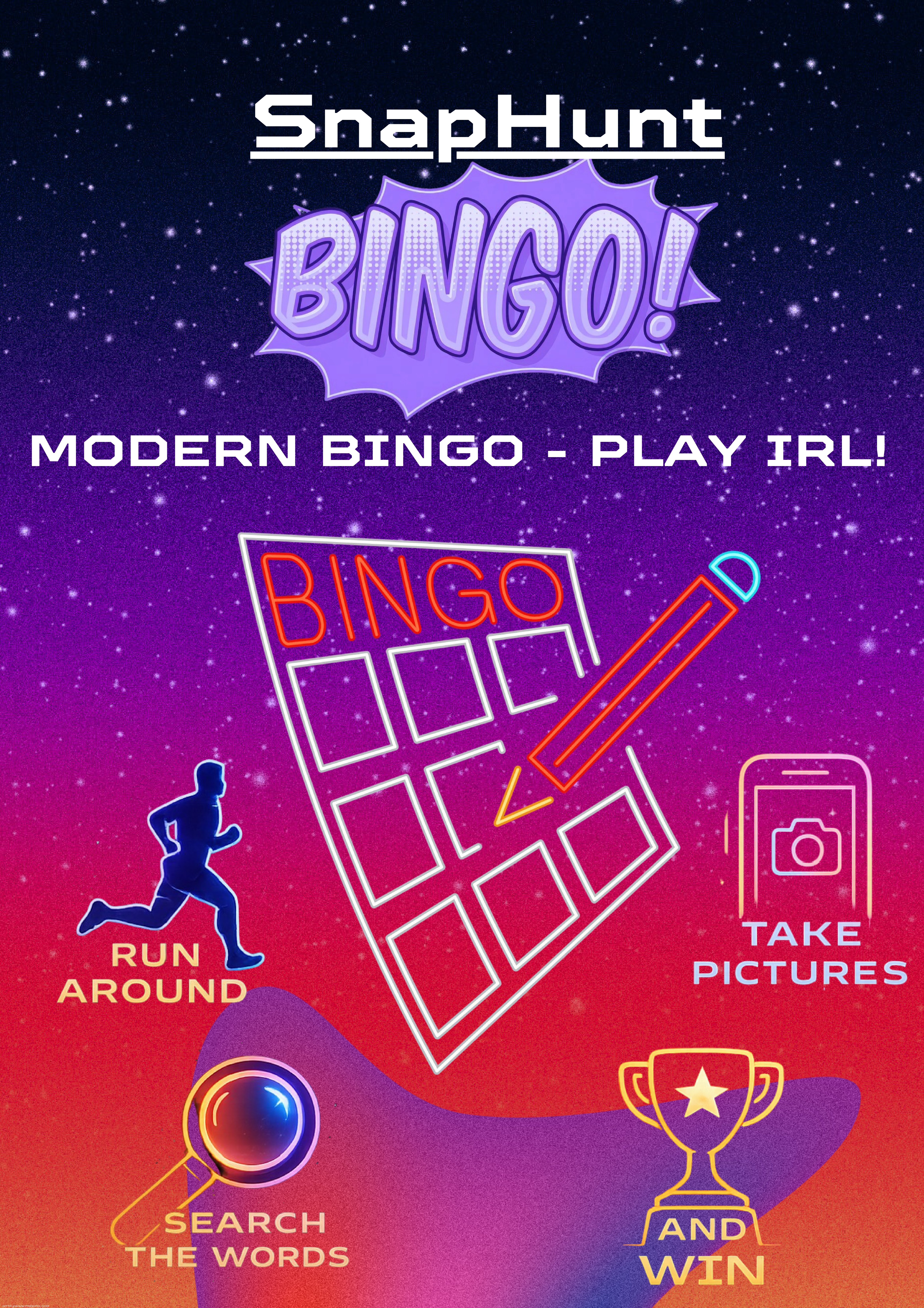
We also created a poster that we can hang up at the MediaNight to show the visitors what our project is about:
Our desk was in the Modulbau (M003). We were project 3 in this room plan:
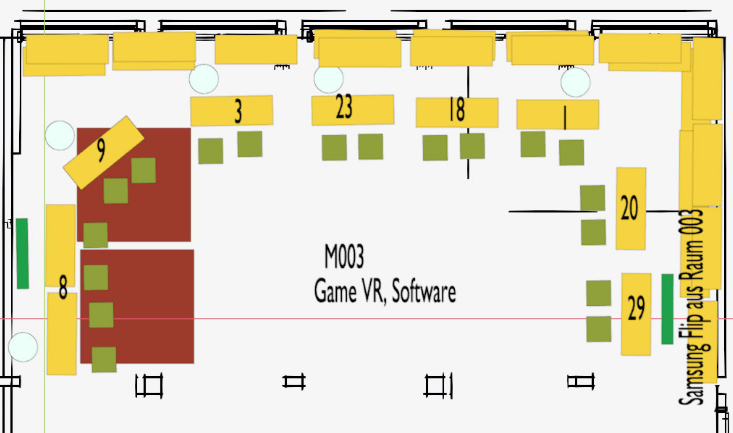
Unfortunately we had two VR projects right next to us (project 8 and 9) so there was often a queue waiting to play these games right in front of our desk. Nevertheless we had many people visiting us and trying out our game.
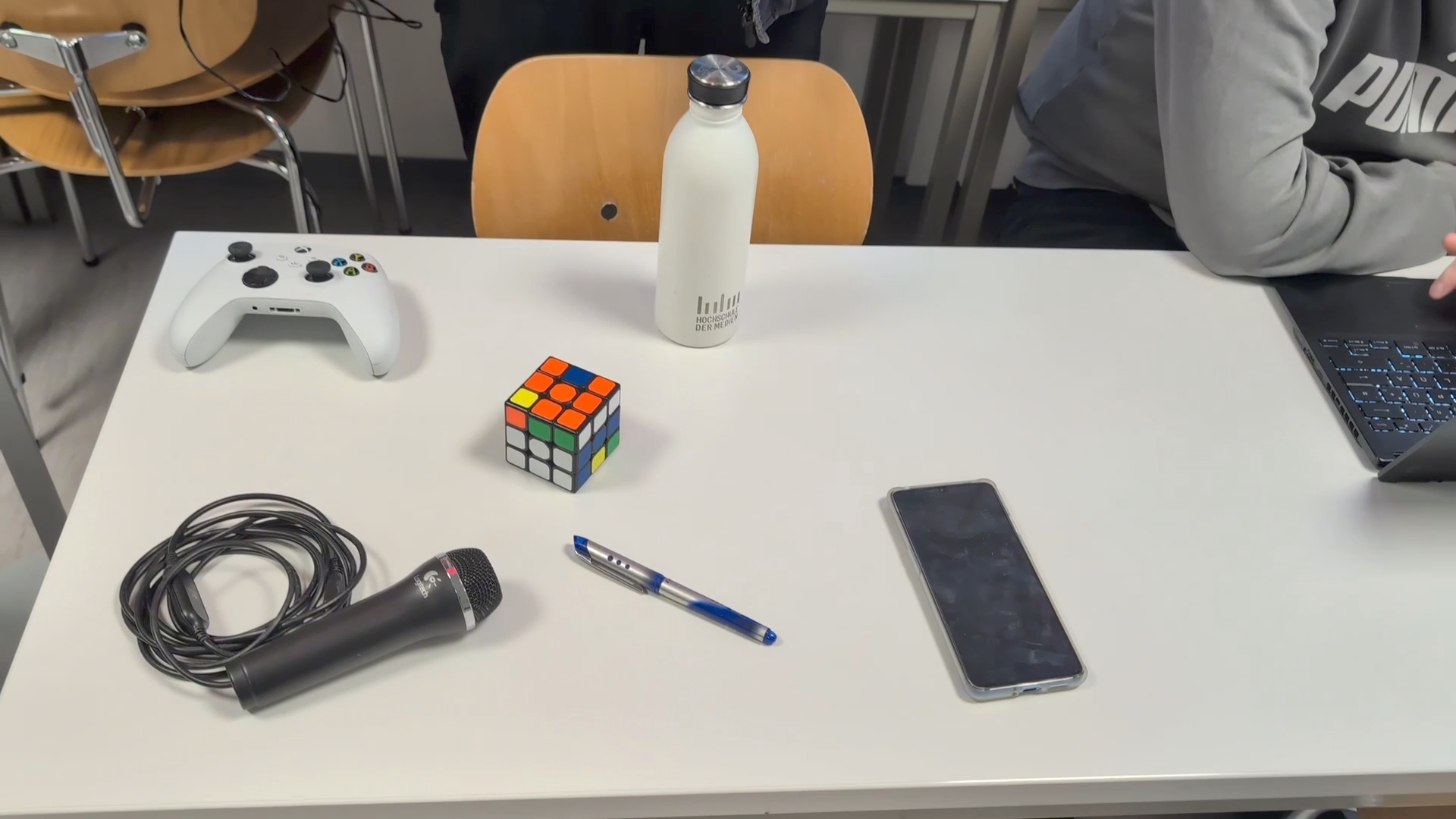
We decided to create a list of 9 words that can be found at the HdM - most of them directly at our table - so visitors can test the app with a low barrier:
Our impressions of the MediaNight
Björn
I’m not a big fan of presenting - especially in front of big crowds. But the only way to keep improving and build confidence is doing these things again and again. And while my part of the presentation at the Präsentationstag might not have been the best project presentation I’m still happy with my performance.
The MediaNight itself was surprisingly pleasant. From past visits I remembered a loud and crowded environment and while it was loud and somewhat crowded I still liked it. I think our idea of having two lent smartphones and some objects on our table to test the game was great. Most used those to test the game. There was only a handful of people who downloaded the app on their own phone and probably none of them decided to make the walk to the excavator. Most people don’t have the patience to test one app over the whole evening which is totally fine. I didn’t do more than one QR-Code on the RewardRun project myself either.
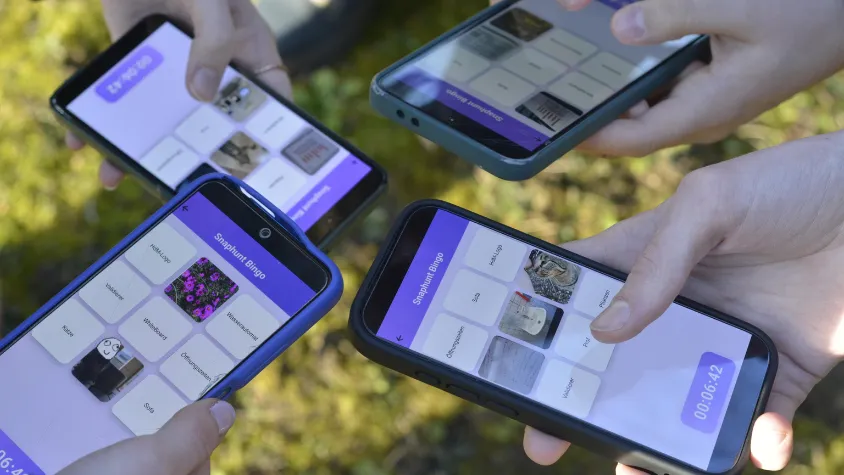
Another positive aspect was that two students from a journalism/public relations course of study approached us at the beginning of the semester to write an article about our project which was released the weekend before the MediaNight:
Auf der Jagd nach dem Bingo-Sieg
Erzan
Like Björn, I am not naturally someone who enjoys presenting in front of large audiences. However, over the past few years, especially through presentations at work and in previous courses, I have had many opportunities to practice speaking in front of groups. Because of that experience, presenting our project on the Präsentationstag felt significantly easier than it would have a few years ago. It felt good to see how much more confident I have become compared to earlier semesters.
The MediaNight itself was my very first one, and I was honestly impressed. I did not expect the event to be this large, well-organized, and full of different projects. Walking through the building and seeing so many creative ideas being presented was inspiring.
We were very happy to see that people stopped by, asked questions, and tried out our game.
Reflection on the Final Project Phase
Looking back at the last weeks before the MediaNight, time management was one of the biggest challenges. As the event approached, it became increasingly important that we had a stable and presentable version of the app.
About one week before the Media Night, parts of the backend were not functioning as they should. We decided to reprioritize responsibilities to ensure that the project would run reliably during the event. Leon shifted more strongly into backend stabilization and took over parts of my previous implementation to make sure everything worked smoothly for the presentation.
At the same time, I focused on other deliverables for the Media Night and the Präsentationstag:
- Designing and preparing the presentation slides
- Creating the project poster
- Producing the trailer
After the event, I shifted my focus back to the backend and worked on additional backend tests.
Leon
This was my first MediaNight, and before the event I could not imagine how many people would actually come to see the projects developed throughout the semester. I was surprised by how many people were interested in our project in the end. At first, no one came to look at our project, and we jokingly made bets about how many times we would be asked about it. In the end, we explained our project to many visitors.
Even though most of them liked the concept and the version of the game there were a few critics. One of them being that the words were fixed and not interchangeable. The biggest flaw was the missing result view.
We had major problems regarding the development of the backend. Even shortly before the MediaNight, the basic game functions had not yet been implemented. I was assured multiple times that they would be finished the following week. As the MediaNight approached fast, I took over the development of the WebSocket-based game logic in the backend while also continuing to work on my frontend tasks.
I was quite happy that we could work out a working version for the MediaNight. Even though we missed the mark with what was planned due to these issues.
Abel
This actually was my second MediaNight, my first one was the one last year for the “Game-Praktikum” lecture where we developed a video game with around 20 people. I was more detached from the whole planing and presentation aspect of the MediaNight. But due to this being a more intimate project with 4 people, I had to stay for around 7 hours instead of the 1 hour last year. Even though I had to stay longer at the MediaNight, it did not feel annoying in any way. Having people come to us and presenting something you spent so much time and effort to build up from the ground was something special. It felt really rewarding, having people coming up to us and being genuinely interested in our project.
My favorite interaction was when someone came up to us and said that they voted for us for the students choice award, which we sadly did not win.
One thing that left a sour taste was the amount of people who after reaching the vote stage kept pressing the “next word” button being confused why it stopped working. I think as a developer you focus a lot on just getting something to work that you start missing the most important part. A game where you can not see whether you reached the predefined goal probably is not a good game. And in our case the missing scoreboard and the amount of people who criticized it was a bit of a downer.
But in the end it was a great experience and I am a bit sad to probably not being able to part take in another MediaNight.
What’s left to do and what’s still to come
Our app is still far from perfect. We still found some bugs and have some features we want to implement. New features would be:
- Join lobby with QR-Code: Instead of typing in the 5 digit lobby code the user should be able to just scan a QR-Code from the host’s screen to join the lobby. That makes playing together easier.
- Summary Screen with download function: We planned to include a summary screen at the end of the game where you can see every player’s bingo board. This way you can see who took which picture and who managed to get a bingo/full line, so extra points (the player already gets extra points on a bingo but they can’t verify it visibly). This view should also have a download button to download one player’s or all players’ pictures on your phone. In the backend development we looked ahead and made decisions so this feature would be easy to include later.
- Custom server address: To make the game self-hostable we want to include a setting on the first screen of the app where you have to type in the server address where the backend is running on.
- Small UX improvements: At the MediaNight we saw some user experience flaws where users tried to do things that are not possible. For example in the evaluation they tried to swipe to the next word instead of using the button on the bottom right. Or they thought that the green box effect after the image was uploaded meant that the AI recognized it as “right”.
- Make it self-hostable: The plan for the project is to not let it die after we got our grades but to keep it alive on a public GitHub page so other people who want to play this game have the ability to do so. For this the backend should be easily deployable, preferably using only one docker-compose file.
So stay tuned for more to come!
- The SnapHunt Bingo team